
Building Code Violations as Evidence in Premises Liability Cases
February 25, 2026
When someone is injured in an apartment building, commercial property, or public space, one of the strongest tools for proving negligence is showing that the property owner violated building, fire, or safety codes. New York City has some of the most comprehensive regulations in the country — and when a landlord or property manager fails to comply, they may be held legally responsible for any resulting injuries.
At LFK Law Practice, P.C., we uncover violations, compare them to the accident conditions, and use them to establish fault in premises liability cases.
NYC Building Code Standards
The NYC Building Code establishes minimum safety standards for construction, maintenance, and occupancy of buildings throughout the city. These rules apply to:
- Staircases and landings
- Handrails and guardrails
- Lighting requirements
- Doorways and exit access
- Flooring materials and slip resistance
- Structural integrity
- Elevators and escalators
- Sidewalks, entrances, and paths of travel
When owners fail to maintain a building according to these standards, accidents become far more likely — including slips, trips, falls, ceiling collapses, stairway accidents, and structural failures.

Examples of building code violations that commonly cause injuries:
- Missing or loose handrails
- Uneven steps or risers
- Improper lighting in hallways or stairwells
- Water-damaged ceilings or collapsing plaster
- Broken or uneven flooring
- Unsafe scaffolding or exterior structures
Proving that a rule was broken is often a direct pathway to showing that the owner breached their duty of care.
Sources:
- NYC Administrative Code — Building Code (Title 28 & Title 27)
- NYC Department of Buildings (DOB) — Building Code Resources
- NYC Construction Codes — 2014 & 2022 Editions
Fire Code & Safety Regulations

New York City also enforces strict Fire Code requirements designed to prevent fires, ensure safe evacuation, and protect building occupants. Fire safety violations often play a central role in burn injuries, smoke inhalation injuries, or preventable fatality cases.
Common fire code violations include:
- Blocked emergency exits
- Locked or inaccessible stairwells
- Missing illuminated exit signs
- Disabled or non-functioning smoke detectors
- Lack of sprinkler systems where required
- Unsafe storage of flammable materials
- Missing fire extinguishers or broken alarms
If a fire-related injury occurred, a building owner who ignored these rules may be held liable for the resulting harm.
Sources:
- NYC Fire Code (Title 29)
- FDNY Fire Safety Inspection Guidelines
- NFPA (National Fire Protection Association) — Fire Safety Standards
ADA Accessibility Requirements
The Americans with Disabilities Act (ADA) sets federal standards to ensure people with disabilities have safe and equal access to buildings and public spaces. These requirements overlap with NYC’s local codes and often serve as powerful evidence in injury cases involving:
- Falls
- Wheelchair or walker obstructions
- Inaccessible entrances
- Unsafe ramps
- Missing guardrails
- Improper handrail height
- Lack of tactile warnings
- Narrow doorways or blocked pathways
Examples of ADA violations that lead to injuries:
- Ramps too steep or lacking handrails
- No curb cuts or accessible walkways
- Elevators out of service for extended periods
- Uneven transition strips
- Doors requiring excessive force to open
ADA noncompliance not only puts people at risk — it can be used to prove that a property owner failed to maintain a safe environment.

Sources:
- Americans with Disabilities Act (42 U.S.C. §12101 et seq.)
- ADA Standards for Accessible Design (2010)
- U.S. Access Board — Accessibility Standards
- U.S. Department of Justice ADA Guidance
Using Violations to Prove Negligence
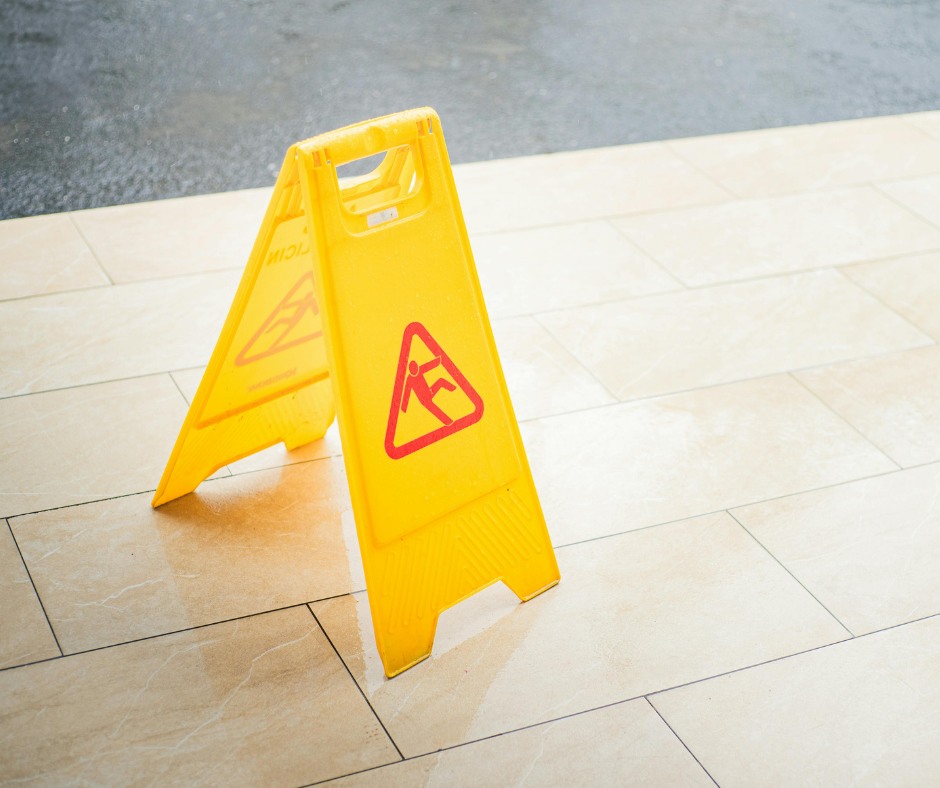
In New York, building, fire, and accessibility violations can be used to show that a property owner breached their legal duty to maintain safe premises. Violations may not automatically prove negligence, but they create strong evidence that:
- A safety rule existed
- The owner failed to follow it
- That failure directly contributed to the injury
Violations may come from:
- NYC Department of Buildings (DOB) inspection records
- FDNY inspection reports
- Housing Preservation & Development (HPD) violations
- ADA compliance audits
- Private engineering reports
Property owners often try to argue that injuries resulted from personal behavior or unavoidable accidents — but documented code violations weaken these defenses significantly.
Examples where violations help prove negligence:
- A tenant falls down a stairwell with no functioning light bulb → lighting code violation
- A fire spreads rapidly due to missing smoke detectors → fire code violation
- A wheelchair user is injured because a ramp is too steep → ADA slope violation
- A visitor slips on loose tile documented in HPD violation reports → building maintenance failure
When these violations can be tied to the exact cause of the accident, they become central evidence in holding the property owner accountable.
Sources:
- NYC Building Code & Fire Code Enforcement Rules
- NYC Housing Preservation & Development (HPD) Violation Search
- National Institute of Standards and Technology (NIST) — Safety Engineering Guidelines
How LFK Law Practice, P.C. Uses Violations to Strengthen Your Case
Our firm investigates code violations by:
- Pulling DOB, FDNY, and HPD building records
- Reviewing past and outstanding violations
- Consulting engineers, architects, and safety experts
- Comparing site conditions to NYC code requirements
- Demonstrating how the violations caused or contributed to the injury
- Holding building owners and managers legally responsible
📞 If you believe your injury was caused by a building or fire code violation, contact LFK Law Practice, P.C. today. Code violations can be powerful evidence — and we know how to use them effectively.

Frequently Asked Questions
How can a building code violation help my injury case?
If a property owner violates NYC Building Code, Fire Code, or ADA requirements, that violation can be powerful evidence of negligence. It helps show that the owner failed to maintain a safe environment, directly contributing to your injury.
What types of building code violations commonly cause injuries?
Common violations include broken handrails, uneven steps, poor lighting, water damage, cracked flooring, missing smoke detectors, blocked exits, and unsafe ramps. These hazards often lead to slips, trips, falls, fires, or accessibility-related injuries.
Can fire code violations be used to prove negligence?
Absolutely. Missing smoke detectors, blocked emergency exits, lack of sprinklers, or disabled alarms can strongly support a claim involving fire or smoke injuries and show that the owner ignored legally required safety measures.
Are ADA violations considered negligence in NYC?
ADA violations can demonstrate that a property was not accessible or safe for people with disabilities. While a violation alone doesn’t guarantee liability, it significantly strengthens a premises liability case involving falls, mobility injuries, or inaccessible pathways.
How do I find out if a building had prior violations?
Your attorney can obtain NYC Department of Buildings (DOB) records, HPD violation reports, FDNY inspection results, and accessibility assessments. These records show whether safety issues were documented or ignored before your accident.
Do I need an expert to prove building code violations caused my injury?
Often, yes. Engineers, architects, and safety experts can analyze the hazard, identify the violated rule, and testify how it directly caused your accident — making your claim stronger and more credible.