
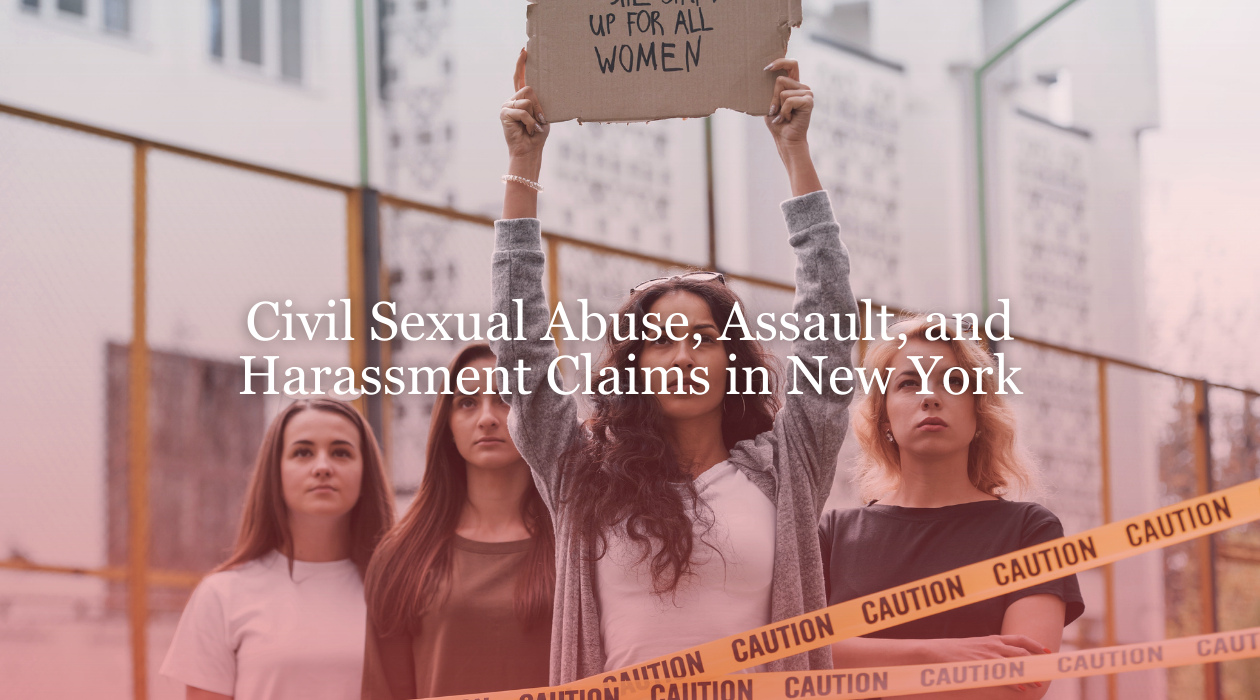
Civil Sexual Abuse, Assault, and Harassment Claims in New York
February 16, 2026
Seeking Justice Beyond the Criminal System
Sexual abuse, assault, and harassment can leave deep and lasting physical, emotional, and psychological harm. While criminal prosecution focuses on punishment, it does not always address the survivor’s need for accountability, compensation, or closure.
New York law allows survivors to pursue civil sexual abuse, assault, and harassment claims, providing an avenue to hold perpetrators—and, in some cases, negligent institutions—legally responsible. Understanding civil rights and legal options empowers survivors to seek justice on their own terms.
What Are Civil Sexual Abuse, Assault, and Harassment Claims?
Civil claims are lawsuits filed by survivors seeking compensation and accountability rather than criminal penalties. These cases may arise from:
- Sexual abuse or assault
- Sexual harassment in schools, workplaces, or institutions
- Abuse by authority figures, caregivers, or professionals
- Institutional failures to prevent or respond to abuse
Unlike criminal cases, civil claims have a lower burden of proof and focus on the harm suffered by the survivor.

Key New York Laws Protecting Survivors
New York has enacted strong survivor-focused laws that expand access to justice, including:
- Adult Survivors Act (ASA) – Temporarily revived expired claims for adult survivors of sexual offenses
- Child Victims Act (CVA) – Extended statutes of limitations for child sexual abuse survivors
- New York Penal Law – Defines sexual offenses and misconduct
- New York Civil Practice Law and Rules (CPLR) – Governs civil filing deadlines and procedures
- New York State Human Rights Law – Prohibits sexual harassment and discrimination
- Title IX of the Education Amendments of 1972 – Protects students from sex-based misconduct
These laws reflect New York’s commitment to survivor access and institutional accountability.
Common Types of Civil Sexual Abuse and Harassment Cases
Civil claims may involve a wide range of misconduct, including:
- Sexual assault or unwanted sexual contact
- Childhood sexual abuse
- Workplace sexual harassment or assault
- School-based abuse or harassment
- Abuse in religious, athletic, or youth organizations
- Abuse in healthcare, residential, or custodial settings
Each case is unique and evaluated based on the facts, harm suffered, and legal standards.

Compensation Available in Civil Sexual Abuse Cases

Survivors may seek compensation for both economic and non-economic damages, including:
- Medical and therapy expenses
- Emotional distress and psychological harm
- Pain and suffering
- Lost income or reduced earning capacity
- Costs related to long-term care or treatment
In some cases, punitive damages may be available to address egregious misconduct.
Statutes of Limitations in New York
Time limits for filing civil claims vary depending on the survivor’s age and the nature of the abuse. New York law has significantly expanded filing windows, particularly for childhood abuse survivors.
Because deadlines can be complex and fact-specific, timely legal guidance is essential to preserve rights.
The Role of Institutions and Title IX Obligations

Schools and educational institutions have a legal duty to prevent and address sexual harassment and assault under Title IX. Failures may include:
- Ignoring reports of misconduct
- Inadequate investigations
- Retaliation against complainants
- Failure to provide supportive measures
Violations can result in civil liability and government enforcement actions.
Key Takeaways
- Civil claims allow survivors to seek justice beyond criminal prosecution
- New York law strongly supports survivor access to accountability
- Institutions may be held liable for failing to prevent or address abuse
- Compensation may address both financial and emotional harm
- Filing deadlines vary and require careful legal evaluation
Injured in a New York Accident? We Can Help!
Even though New York is a “no-fault” state, insurance companies often limit or deny claims — especially when serious injuries are involved. An experienced personal injury attorney can help you:
- File your no-fault claim properly
- Challenge unfair denials or underpayments
- Determine if your injuries meet the serious injury threshold
- Pursue full compensation for pain, suffering, and future losses
At LFK Law Practice, P.C., we help New York drivers navigate the no-fault system and fight for the compensation they deserve after a crash.
 Contact us today for a free consultation — and let us handle the insurance while you focus on recovery.
Bottom Line

Civil sexual abuse, assault, and harassment claims provide survivors with a powerful legal tool to seek accountability, healing, and justice. New York’s survivor-centered laws recognize the lasting impact of abuse and expand opportunities to hold both individuals and institutions responsible. Understanding these rights is an important step toward reclaiming control and protecting others from harm.
Frequently Asked Questions (FAQs)
Do I need a criminal conviction to file a civil claim?
No. Civil claims are independent of criminal cases.
Can institutions be held responsible even if they didn’t commit the abuse?
Yes. Institutions may be liable for negligence or failure to protect.
Will my identity be made public?
Courts may allow survivors to proceed anonymously in certain cases.
Is retaliation for reporting sexual misconduct legal?
No. Retaliation is prohibited under New York and federal law.
References
- New York Penal Law. Sexual offenses and misconduct provisions.
- New York Civil Practice Law and Rules (CPLR). Civil filing deadlines and procedures.
- Adult Survivors Act (2022). New York State Legislature.
- Child Victims Act (2019). New York State Legislature.
- New York State Human Rights Law, N.Y. Exec. Law § 290 et seq.
- U.S. Department of Education, Office for Civil Rights (OCR). Title IX enforcement guidance.