
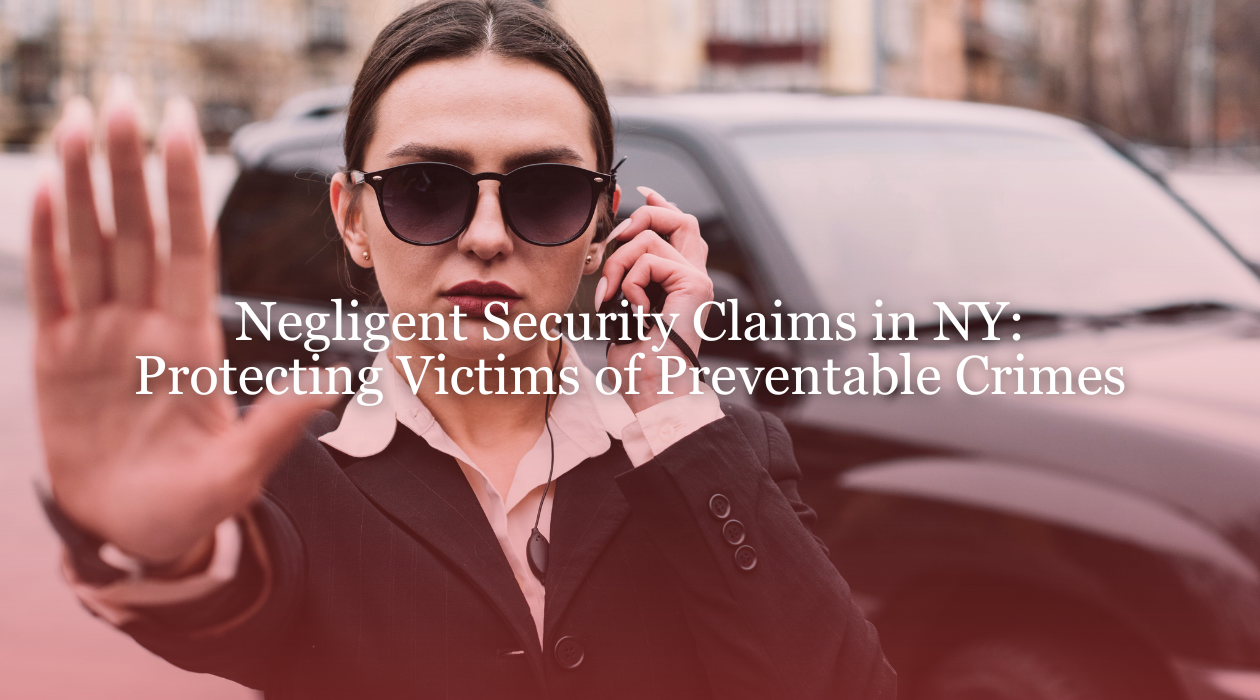
Negligent Security Claims in NY: Protecting Victims of Preventable Crimes
February 17, 2026
When Crime Should Have Been Prevented
An assault, robbery, or violent crime can change a life in seconds. While the criminal act itself may be unexpected, many violent incidents are entirely preventable. In New York, when property owners fail to provide reasonable security despite known risks, they may be held legally responsible through negligent security claims.
Negligent security cases exist to protect victims and hold property owners accountable for unsafe conditions. If inadequate lighting, broken locks, missing security guards, or faulty surveillance played a role in your injury, you may have legal options.
What Is Negligent Security in New York?
Negligent security is a type of premises liability claim that arises when a property owner fails to take reasonable precautions to protect lawful visitors from foreseeable criminal activity.
New York law requires property owners and managers to maintain safe premises. When they ignore known security risks and someone is injured as a result, they may be liable for damages.
Common Examples of Negligent Security
- Poor or nonexistent lighting in hallways or parking lots
- Broken door locks or unsecured entrances
- Lack of trained security personnel in high-risk locations
- Nonfunctional security cameras or alarms
- Failure to address prior criminal incidents
This helps accident victims get care faster and keeps minor cases out of the courtroom.
Where Negligent Security Claims Commonly Happen
Negligent security claims in NY often occur in locations where safety is expected but ignored:
- Apartment buildings and residential complexes
- Hotels, motels, and short-term rentals
- Shopping centers and retail stores
- Parking garages and parking lots
- Bars, nightclubs, and entertainment venues
- Office buildings and campuses
If a property has a history of crime or is located in a high-risk area, owners are expected to take enhanced security measures.
What Victims Must Prove in a Negligent Security Claim
Legal Duty of Care: The property owner owed a duty to provide reasonable security for tenants, guests, or visitors.
Failure to Provide Adequate Security: The owner failed to implement or maintain proper safety measures, such as lighting, locks, cameras, or security personnel.
Foreseeability of the Crime: The violent crime was foreseeable based on prior similar incidents, police reports, crime statistics, or known security risks on the property.
Causation: The lack of adequate security directly contributed to the attack or injury.
Damages: The victim suffered measurable losses, including physical injuries, emotional distress, medical expenses, or lost income.

Who Can Be Held Responsible?

Multiple parties may be held liable in a negligent security case, including:
- Property owners or landlords
- Property management companies
- Business owners or operators
- Security contractors responsible for on-site protection
Liability depends on who controlled the premises and security measures at the time of the incident.
Compensation Available to Negligent Security Victims
Victims of negligent security in New York may recover compensation for:
- Emergency and ongoing medical expenses
- Lost wages and diminished earning capacity
- Pain and suffering
- Emotional distress and psychological trauma
- Permanent injuries or disabilities
- Wrongful death damages for surviving family members
These claims focus on restoring what was taken due to preventable negligence.

Key Factors, Deadlines, and Steps in New York Negligent Security Claims
Foreseeability in NY Negligent Security Cases: Foreseeability is the foundation of negligent security claims. Property owners must address known dangers such as prior criminal activity, poor lighting, or repeated safety complaints. When a risk is predictable, a legal duty to prevent harm exists.
Statute of Limitations in New York: Most negligent security lawsuits must be filed within three years from the date of injury. Shorter deadlines may apply if the incident occurred on government-owned property, making prompt action essential.
What to Do After a Negligent Security Incident: Seek immediate medical care, report the crime to law enforcement, document unsafe conditions or security failures, gather witness information if possible, and avoid giving statements without legal guidance. Early documentation is often critical to preserving evidence and protecting your claim.
Key Takeaways
- Negligent security is a serious premises liability issue in New York
- Property owners must protect against foreseeable crimes
- Inadequate security can create legal liability
- Victims may pursue compensation for physical and emotional harm
- Acting quickly preserves legal rights and evidence
Why You Should Speak With a New York Negligent Security Lawyer
Negligent security cases are complex, and property owners and their insurance companies often deny responsibility—especially when violent crimes are involved. An experienced New York negligent security attorney can help you:
Identify whether the crime was foreseeable under New York law
Prove the property owner failed to provide adequate security
fPreserve critical evidence before it is lost or destroyed
Hold property owners and insurers accountable for serious injuries
Pursue full compensation for medical bills, emotional trauma, lost income, and future damages
At LFK Law Practice, P.C., we help victims of violent crimes navigate negligent security claims and fight for the compensation they deserve.
Contact us today for a free consultation and let us handle the legal burden while you focus on healing and recovery.
Bottom Line

Negligent security claims exist because many violent crimes should never happen. When property owners ignore safety risks and fail to protect the people who rely on them, New York law provides victims with a powerful path to accountability and recovery. Understanding your rights is the first step toward justice.
Frequently Asked Questions (FAQs)
Can property owners be liable for third-party criminal acts? Yes. If the crime was foreseeable and adequate security was not provided, liability may apply.
What if the attacker was never identified? A negligent security claim does not require the criminal to be caught or convicted.
Are landlords responsible for tenant safety? Yes. Landlords have a duty to provide reasonable security in common areas.
Does shared fault prevent recovery? No. New York follows comparative negligence, allowing victims to recover damages even if partially at fault.
What evidence helps negligent security cases? Security footage, police reports, prior crime records, maintenance logs, and witness statements are all valuable.
References
- New York Civil Practice Law and Rules. (n.d.). CPLR. New York State Senate.
- New York Court of Appeals. (n.d.). Premises liability and foreseeability of criminal acts. New York Unified Court System.
- New York Pattern Jury Instructions—Civil. (n.d.). Negligence and premises liability instructions. New York State Unified Court System.
- New York Real Property Law. (n.d.). Landlord and property owner duties. New York State Senate.
- Restatement (Second) of Torts. (1965). Negligence and duty of care. American Law Institute.
- Uniform Fire Prevention and Building Code of New York State. (n.d.). Minimum safety and building standards. New York Department of State.